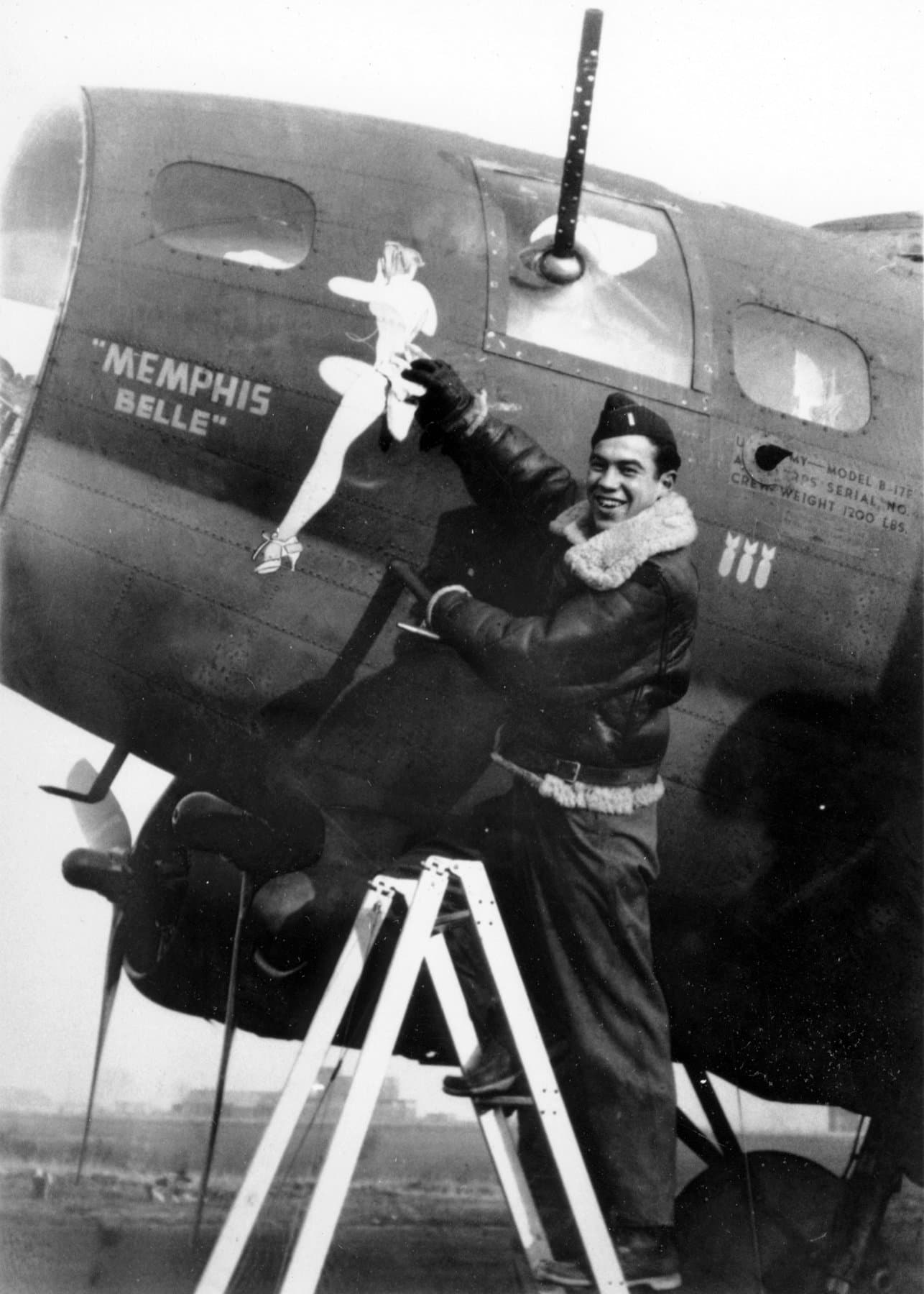
Tony Starcer
Corporal (retired as Sergeant) · 91st Bombardment Group (Heavy), Eighth Air Force · 1919-1986
The most prolific nose art painter of World War II gave up art after the war, worked in a warehouse for 36 years, and was called out of retirement to repaint his own masterpiece.
Tony Starcer arrived at Bassingbourn, England, in 1942 as a line mechanic assigned to the 91st Bombardment Group. He had no formal art training. What he had was a steady hand, a willingness to work, and the one skill nobody else in the group possessed: the ability to make a pin-up girl appear on the nose of a B-17 Flying Fortress.
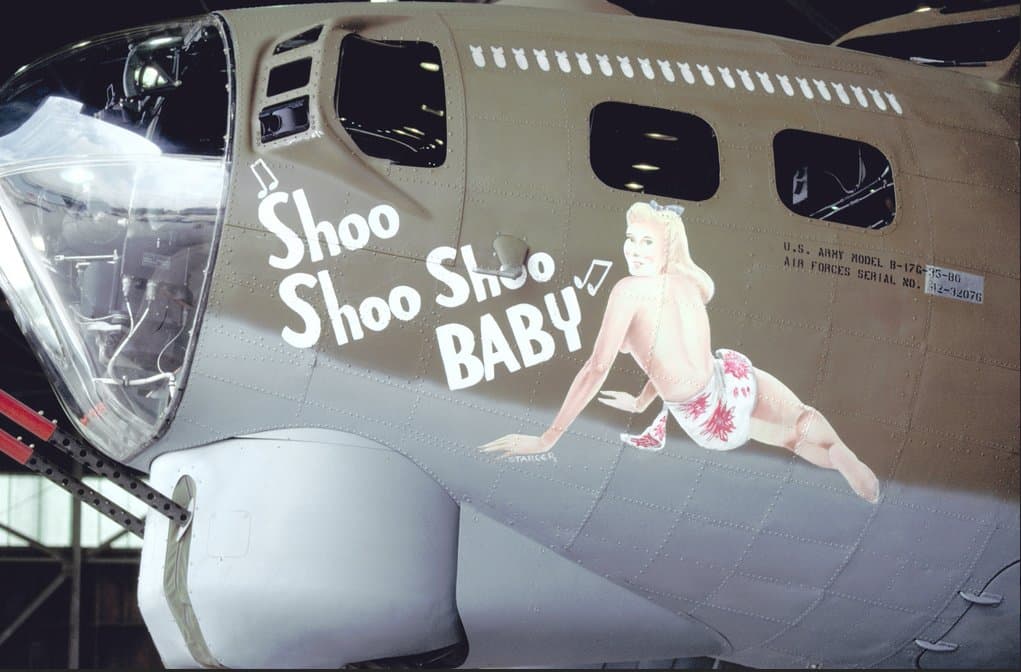
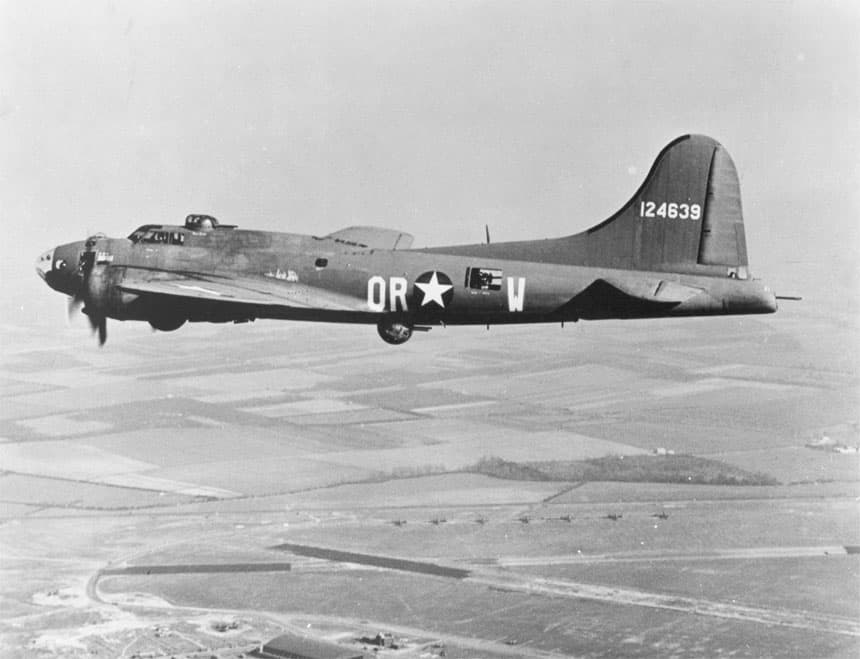
Over the course of his service, Starcer painted the nose art on approximately 124 to 130 bombers. No other individual artist in World War II came close to this volume. His brush created the Memphis Belle, Shoo Shoo Baby, Nine O Nine, Sleepy Time Gal, Outhouse Mouse, Chowhound, and Yankee Doodle. He worked from magazine pin-ups, from crew requests, and from his own imagination, using whatever paint the ground crew could acquire.
The Army had no Military Occupational Specialty for "artist." Starcer was classified as a mechanic. He painted nose art between shifts, during off-hours, at the request of crews who wanted their aircraft to carry something personal into combat. In a bomb group where the statistical odds of surviving a tour were not encouraging, a painted woman on the fuselage was a talisman, a mascot, and a reminder of what waited at home.
When the war ended, Starcer came home to California. "When I came out of the service the competition in art was real strong and I wanted to get married, so I just got a job and gave up art," he later explained. He took a job at the May Company distribution center and worked in a warehouse for the next thirty-six years. The most prolific nose art painter of the Eighth Air Force never picked up a brush again.
In March 1980, a "rebirth" of interest in Starcer began when aviation historians tracked him down. In 1981, the 512th Antique Restoration Group at Dover Air Force Base brought him out of retirement to recreate his original nose art on the restored Shoo Shoo Baby. For the first time in thirty-six years, Starcer held a paintbrush and recreated the Vargas-inspired pin-up from memory.
He died in 1986 before the restoration was completed. Thirteen of his original oil-on-canvas paintings, works he had painted from memory after the war, were acquired by the National Museum of the Mighty Eighth Air Force in Savannah, Georgia. His recreated artwork remains on the Shoo Shoo Baby at the Smithsonian's Udvar-Hazy Center.
The man who painted the Memphis Belle spent the rest of his life working in a warehouse. That story has never been told. Until now.
Frequently Asked Questions
- How many aircraft did Tony Starcer paint?
- Approximately 124 to 130 B-17 bombers of the 91st Bomb Group, more than any other individual nose artist of WWII, including the Memphis Belle, Shoo Shoo Baby, and Nine O Nine.
- Did Tony Starcer have formal art training?
- No. He arrived at Bassingbourn in 1942 as a line mechanic with no formal training. The Army had no occupational specialty for 'artist,' so he was classified as a mechanic.
- What did Tony Starcer do after the war?
- He gave up art entirely and worked in a May Company warehouse in California for 36 years, never picking up a brush again until 1981.
- Why did Tony Starcer paint again in 1981?
- The 512th Antique Restoration Group brought him out of retirement to repaint his original nose art on the restored Shoo Shoo Baby. He died in 1986 before the restoration was finished.
Aircraft by Tony Starcer
More Artists
Alberto Vargas
He never painted a single aircraft. Yet the Peruvian illustrator's Esquire pin-ups became the most-copied source in the history of nose art, traveling from a magazine page in a barracks to the aluminum skin of bombers in every theater of the war.
Read the story →Sarkis Bartigian
A RISD-trained commercial muralist who enlisted at 36 and created the largest nose art in WWII. Killed in a car accident at 49.
Read the story →