From the First Italian Fighter Pilot to the 1993 Mandate
Ten inflection points in the life of an anonymous art form: the pilots who started it, the mechanics who perfected it, the scrapyards that destroyed most of it, and the Pentagon memo that officially ended it.
Timeline of Nose Art Inflection Points
- 1918Origin
Italian Pilots Paint the First Nose Art
Italian fighter pilots in World War I decorate their aircraft with mouths, eyes, and personal insignia. American volunteers in the Lafayette Escadrille adopt the tradition and bring it home.
- 1933–1941Origin
Esquire Magazine Popularizes the Pin-Up
Illustrators George Petty and Alberto Vargas define the American pin-up in the pages of Esquire. Every serviceman's foot locker carries a Varga Girl. The pin-up crosses into the squadron.
- 1942War
Corporal Tony Starcer Arrives at Bassingbourn
A line mechanic with no art training begins painting pin-ups on B-17s. Over three years he paints 124–130 bombers — more than any individual artist in WWII.
Read Tony Starcer's story - May 17, 1943War
Memphis Belle Completes 25 Missions
The first B-17 to finish a full tour of duty. A Wyler documentary and a publicity tour make her the most famous bomber in history. Captain Morgan had, by then, already moved on from Margaret Polk.
See the Memphis Belle - 1944War
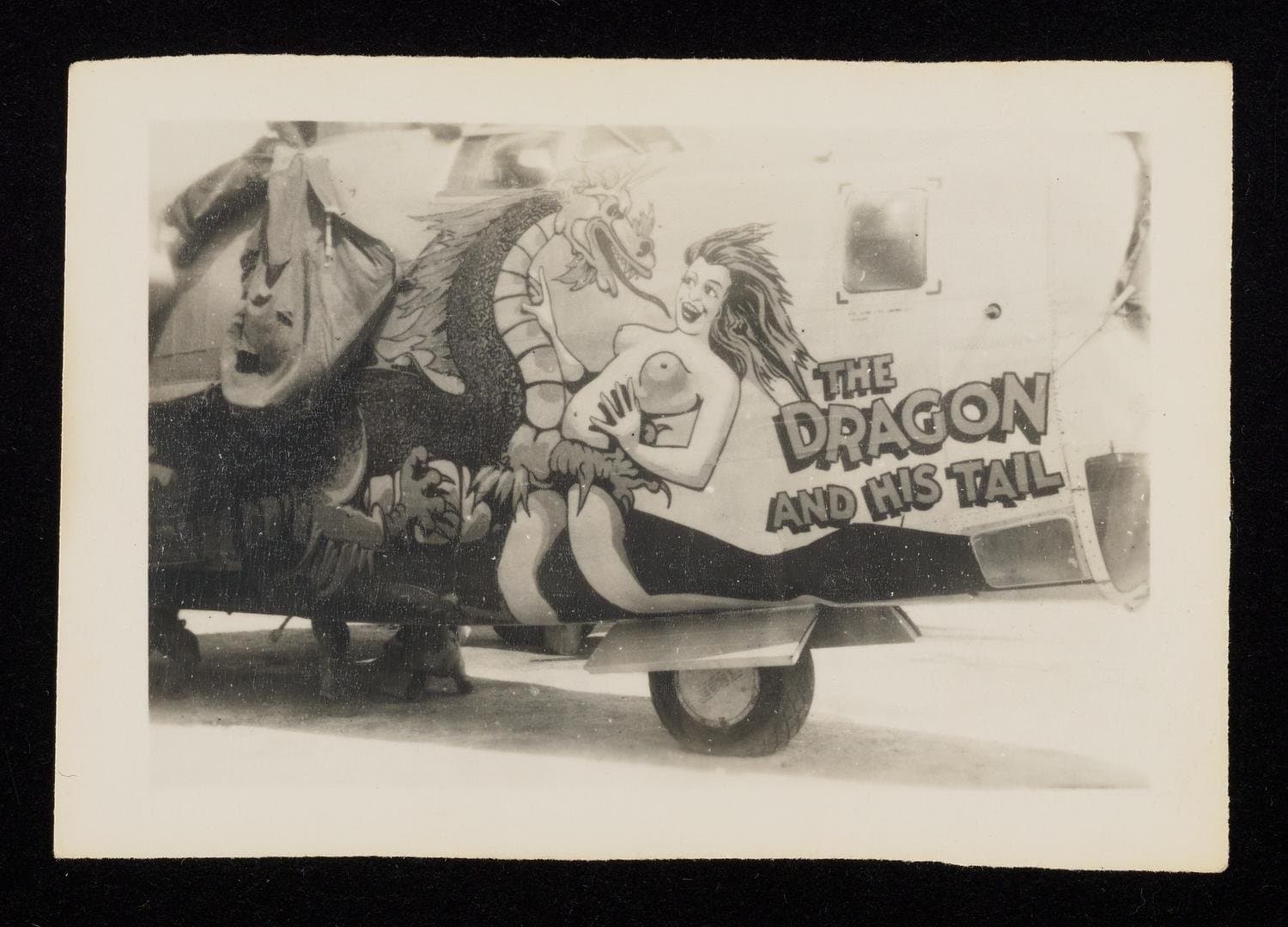
The Dragon and His Tail
RISD-trained Sgt. Sarkis Bartigian paints a 35-foot dragon across a B-24. It becomes the largest and most celebrated nose art of the war — and, later, the most infamous loss.
Read the Dragon's story - 1945–1948Destruction
Kingman, Walnut Ridge, Chino
Up to 5,500 combat aircraft are fed into smelters at the Kingman boneyard alone. Ground crews watch their artwork disappear into aluminum ingots. A junkyard manager named Martin Caidin swings an axe to save a handful of panels.
- 1947Destruction
The $2,000 Dragon Nobody Bought
A scrapyard worker offers the full Dragon and His Tail nose to anyone willing to pay. The price: $2,000. Nobody comes. The masterpiece is melted.
- 1970sRevival
Warbird Restoration Movement
The Commemorative Air Force (founded 1957) and private restorers begin bringing WWII aircraft back. Nose art returns — recreated, researched, reconstructed from memory and photographs.
- 1981Revival
Starcer Picks Up the Brush
After 36 years working in a warehouse at the May Company, Tony Starcer is brought out of retirement to recreate his Shoo Shoo Baby artwork from memory. He dies five years later, before the aircraft is finished.
- 1993Censorship
The Gender-Neutral Mandate
The U.S. Department of Defense issues guidance ending overtly sexualized or gender-specific nose art on active-duty aircraft. The pin-up tradition that began in 1918 effectively closes. The 34 surviving original WWII panels become the definitive physical record.
Painted for War
The Stories Behind WWII’s Most Famous Nose Art
Nobody told these stories. The mechanic who painted the Memphis Belle and spent the rest of his life in a warehouse. The RISD-trained muralist whose masterpiece was scrapped for two thousand dollars. The junkyard manager who sent his workers with axes to save pin-up girls from the smelter. Narrative nonfiction by Christopher Scott Lannon.