Sarkis Bartigian
Staff Sergeant · 43rd Bomb Group, 64th Bomb Squadron, Fifth Air Force · 1906-1955
A RISD-trained commercial muralist who enlisted at 36 and created the largest nose art in WWII. Killed in a car accident at 49.
Before the war, Sarkis Bartigian was a professional. A graduate of the Rhode Island School of Design, he earned his living painting murals for restaurants and movie theaters. He was a commercial artist with real training and a real career. He was also thirty-six years old when he enlisted in the Army Air Forces, far older than the teenagers and twenty-somethings who filled the barracks around him.
The Army sent Bartigian to the Pacific, to the 43rd Bomb Group's 64th Bomb Squadron. The Fifth Air Force operated in New Guinea and the Philippines, in conditions that made the European Theater look civilized. Tropical heat, jungle mud, malaria, and Japanese fighters that were frequently more maneuverable than the American aircraft they attacked.
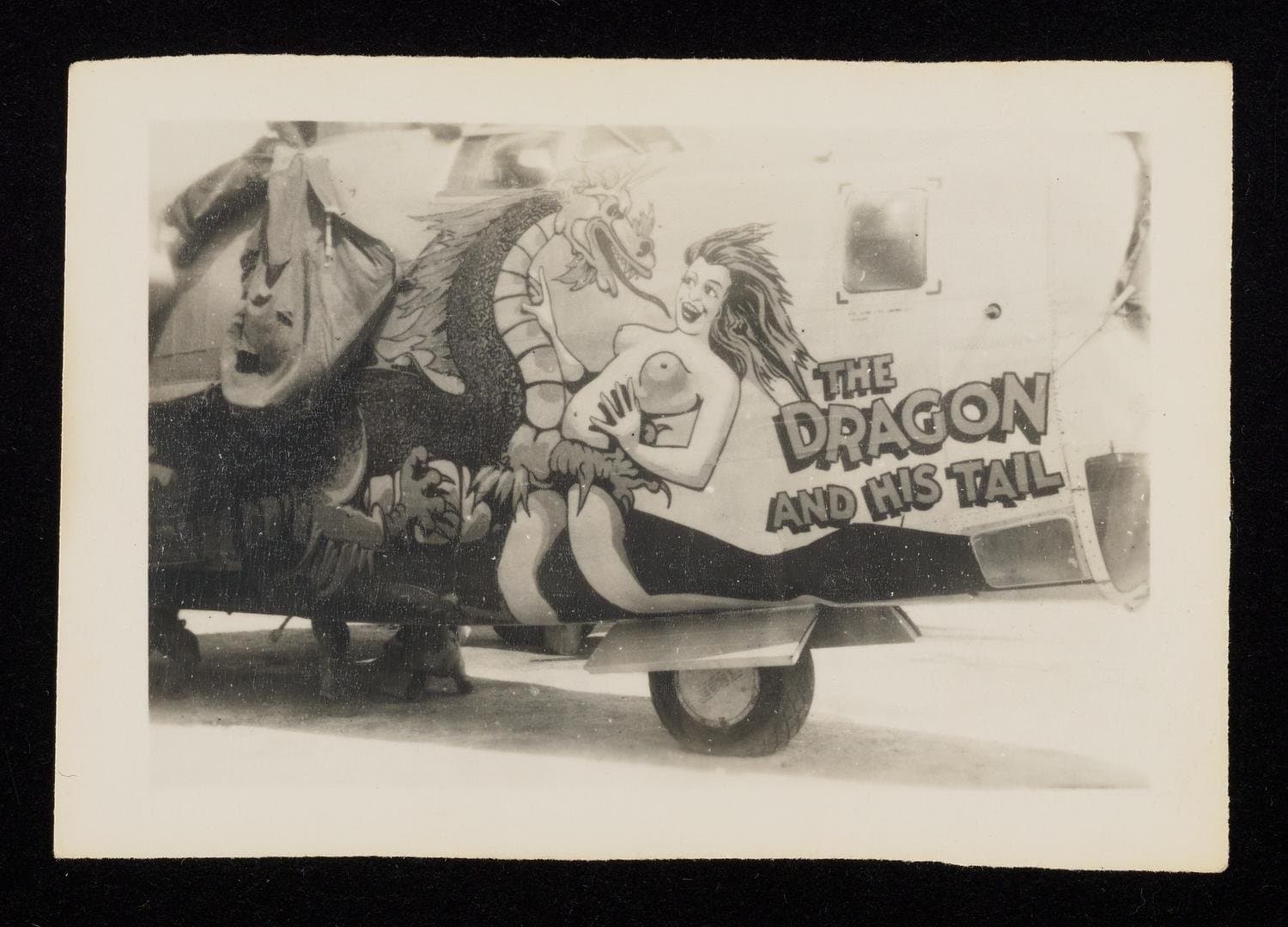
On the fuselage of B-24J number 44-40973, Bartigian applied everything he had learned at RISD and in the commercial art world. He painted a dragon clutching a nude woman, rendered in full color, spanning the entire length of both sides of the Liberator's fuselage from the nose turret to the tail turret. It was the largest known nose art in World War II, and it was painted by the only formally trained professional muralist known to have served as an enlisted nose art painter.
He also painted "Mabel's Labels," a portrait of his wife Mabel on another B-24. The personal and the professional merged on aluminum.
After the war, Bartigian returned home to Mabel. He was killed in an automobile accident in 1955. He was forty-nine years old.
The Dragon and His Tail, his masterpiece, had been scrapped at Kingman, Arizona, years earlier. The workers at the scrapyard had tried to save it, setting it aside while they processed the other bombers, hoping someone would pay the two thousand dollars to buy the aircraft. Nobody came. The finest piece of nose art in the Pacific Theater was melted down with the rest.
Frequently Asked Questions
- Who was Sarkis Bartigian?
- A Rhode Island School of Design graduate and commercial muralist who enlisted at 36 and painted the largest nose art of WWII, The Dragon and His Tail, on a B-24J in the Pacific.
- What was Bartigian's most famous work?
- The Dragon and His Tail, a dragon clutching a nude woman spanning the full length of a B-24J's fuselage, the largest known nose art of the war.
- What happened to The Dragon and His Tail?
- It was scrapped at Kingman, Arizona. Workers set it aside hoping someone would pay the reported $2,000, but nobody did and it was melted down.
- How did Sarkis Bartigian die?
- He was killed in an automobile accident in 1955 at age 49, years after his masterpiece had already been scrapped.
Aircraft by Sarkis Bartigian
More Artists
Tony Starcer
The most prolific nose art painter of World War II gave up art after the war, worked in a warehouse for 36 years, and was called out of retirement to repaint his own masterpiece.
Read the story →Clarence Simonsen
The Canadian historian known as 'Mr. Nose Art' spent fifty years chasing down the men who painted WWII bombers, then hand-copied their vanished work onto the salvaged aluminum skin of the aircraft that carried it. When almost every original had been fed into a smelter, his recreations were what survived.
Read the story →