Shoo Shoo Baby
B-17G-35-BO · 42-32076
A bomber that traveled from England to Sweden to France to Germany to America. Its artist returned after 36 years to repaint it.
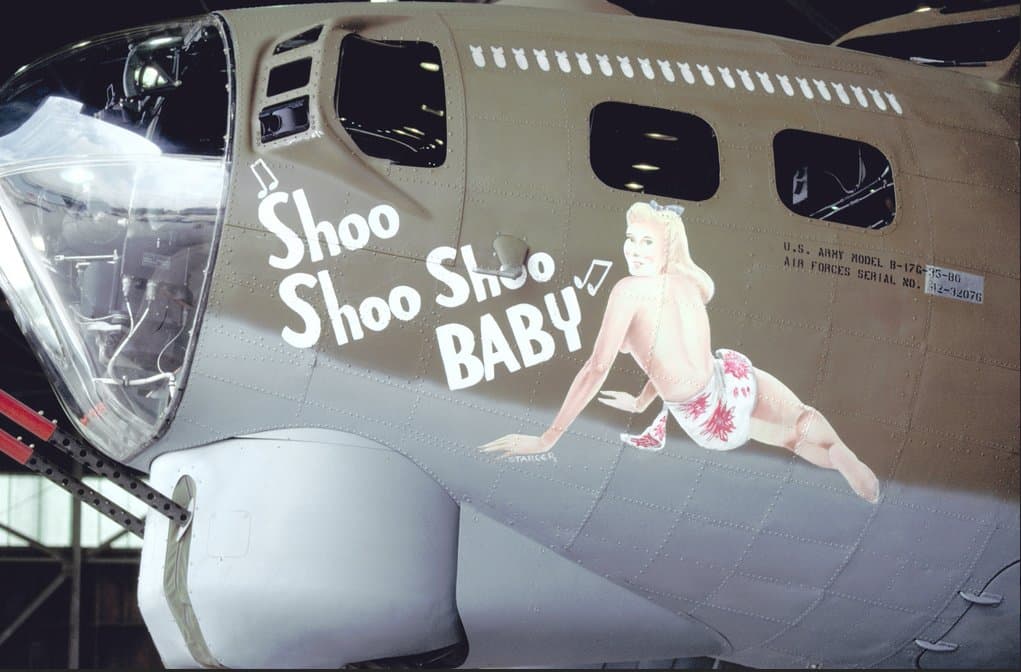
The Andrews Sisters had a hit in 1943 with "Shoo-Shoo Baby," and a crew of the 91st Bomb Group at Bassingbourn liked the name enough to give it to their B-17. Corporal Tony Starcer painted the nose art, basing the pin-up on Alberto Vargas's "Hawaii" illustration from Esquire magazine.
Shoo Shoo Baby flew combat missions over Europe until it was forced to land in neutral Sweden after battle damage. The aircraft sat out the rest of the war in Swedish custody. After V-E Day, it passed through France and Germany before being abandoned in civilian service in Europe. By the 1960s, it was sitting in a field.
Australian aviation historian Steve Birdsall tracked it down. French officials donated the aircraft to the United States Air Force in 1972. It was disassembled, crated, trucked to Rhein-Main Air Base in Germany, and airlifted to the United States aboard a C-5A Galaxy transport.
The 512th Antique Restoration Group at Dover Air Force Base took on the restoration. Sixty thousand man-hours of work. In 1981, they tracked down Tony Starcer, who had not touched a paintbrush since leaving the service in 1945. For thirty-six years, the most prolific nose art painter of the Eighth Air Force had worked in a warehouse for the May Company distribution center in California.
They brought him to Dover to repaint his original artwork on the restored bomber. Starcer picked up a brush for the first time in thirty-six years and recreated the Vargas-inspired pin-up from memory.
He died in 1986, before the full restoration was completed. His recreated artwork remains on the aircraft today, now housed at the Smithsonian's Steven F. Udvar-Hazy Center in Chantilly, Virginia.
Frequently Asked Questions
- How did Shoo Shoo Baby get its name?
- A 91st Bomb Group crew named their B-17 after the Andrews Sisters' 1943 hit 'Shoo-Shoo Baby.' Tony Starcer painted the nose art from Alberto Vargas's 'Hawaii' Esquire illustration.
- What happened to Shoo Shoo Baby during the war?
- Battle damage forced it to land in neutral Sweden, where it sat out the rest of the war before passing through France and Germany and being abandoned in Europe.
- How was Shoo Shoo Baby recovered?
- Historian Steve Birdsall tracked it down; French officials donated it to the USAF in 1972, and it was airlifted to the US aboard a C-5A Galaxy and restored over 60,000 man-hours at Dover AFB.
- Did the original artist repaint Shoo Shoo Baby?
- Yes. In 1981 Tony Starcer, who had not painted since 1945, was brought to Dover and recreated his Vargas-inspired pin-up from memory. The aircraft is now at the Smithsonian Udvar-Hazy Center.
Next Story
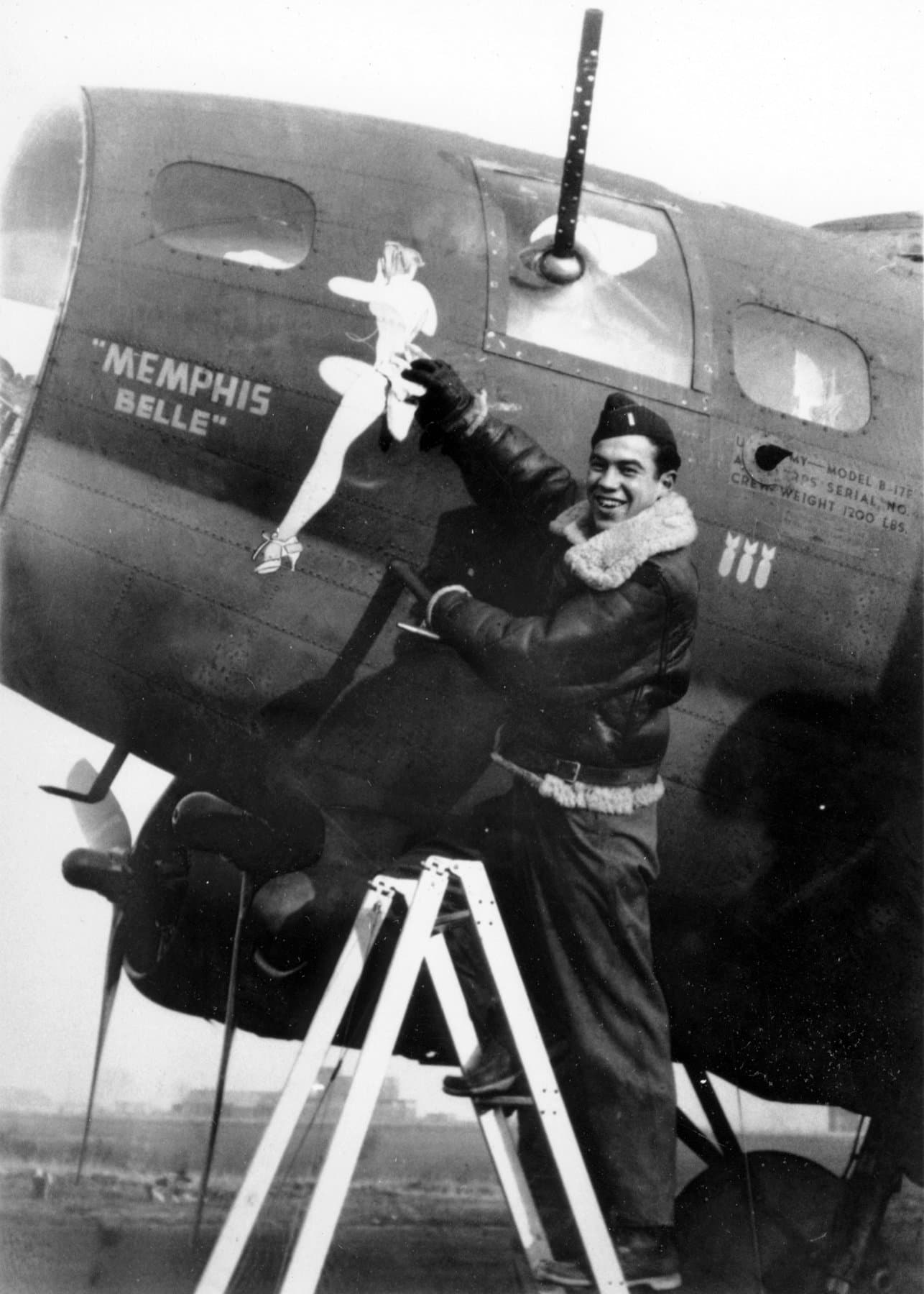
Memphis Belle
The most famous bomber of World War II carries a pin-up nobody posed for, painted by a mechanic who gave up art after the war.
Read the story →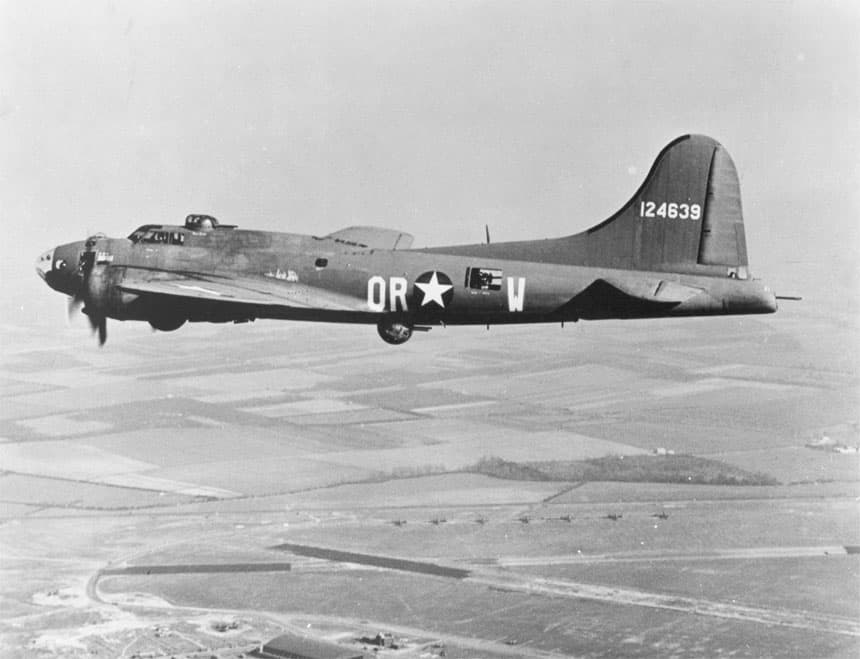
Nine-O-Nine
A B-17 that flew 140 combat missions and brought every crew home, named for nothing more than the last three digits of its serial number.
Read the story →