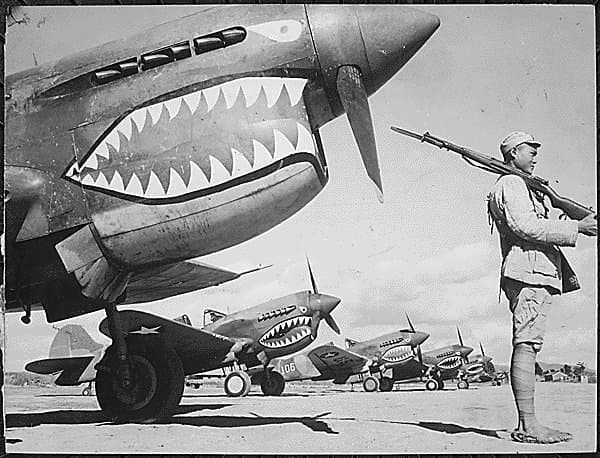
Flying Tigers Shark Mouth
P-40 Warhawk / Tomahawk · Various (unit-wide design)
The most iconic nose art in aviation history traveled from a German fighter to a British desert squadron to a newspaper photo to an American diary in China.
The shark mouth grinning from the nose of a P-40 Warhawk is the single most recognized piece of nose art in aviation history. It did not originate with the Flying Tigers. It traveled there, through a chain of transmission that reads like a detective story about how ideas move in wartime.
The design first appeared in World War I, on a German Roland C.II and a British Sopwith Dolphin. It resurfaced in 1940 when pilots of the German Luftwaffe's Zerstorergeschwader 76 painted shark mouths on their Messerschmitt Bf 110 twin-engine fighters.
In North Africa, pilots of the Royal Air Force's 112 Squadron saw the German design and copied it onto their own P-40 Tomahawks. Photographs of the RAF sharks appeared in the November 2, 1941 issue of The Illustrated Weekly of India.
An American Volunteer Group pilot named Charles Bond saw the article in a copy of the magazine that had made its way to the AVG's base in Kunming, China. He wrote in his diary: "Gee! I want my P-40 to look like that!"
The AVG ground crews painted the shark mouths on their P-40s, and the design became synonymous with the Flying Tigers. Claire Chennault's men earned credit for destroying 296 enemy aircraft while losing only 14 pilots in combat. The shark mouth traveled from Germany to North Africa to India to China, from a magazine page to a diary entry to the most iconic image in military aviation.
Every restored P-40 Warhawk in every air show and museum in the world carries some version of the shark mouth today. The design has outlived every pilot who wore it.
Frequently Asked Questions
- Where did the Flying Tigers shark mouth come from?
- It did not originate with the Flying Tigers. The design dated to WWI, was revived by German Bf 110 crews in 1940, copied by RAF 112 Squadron in North Africa, then adopted by the American Volunteer Group in China.
- How did the AVG get the shark-mouth design?
- AVG pilot Charles Bond saw a photo of RAF 112 Squadron's shark-mouthed P-40s in the November 1941 Illustrated Weekly of India and wrote in his diary, 'Gee! I want my P-40 to look like that!'
- What aircraft carried the Flying Tigers shark mouth?
- The Curtiss P-40 Warhawk. AVG ground crews painted the shark mouths on their P-40s at Kunming, China.
- What was the Flying Tigers' combat record?
- Claire Chennault's American Volunteer Group was credited with destroying 296 enemy aircraft while losing only 14 pilots in combat.
Next Story
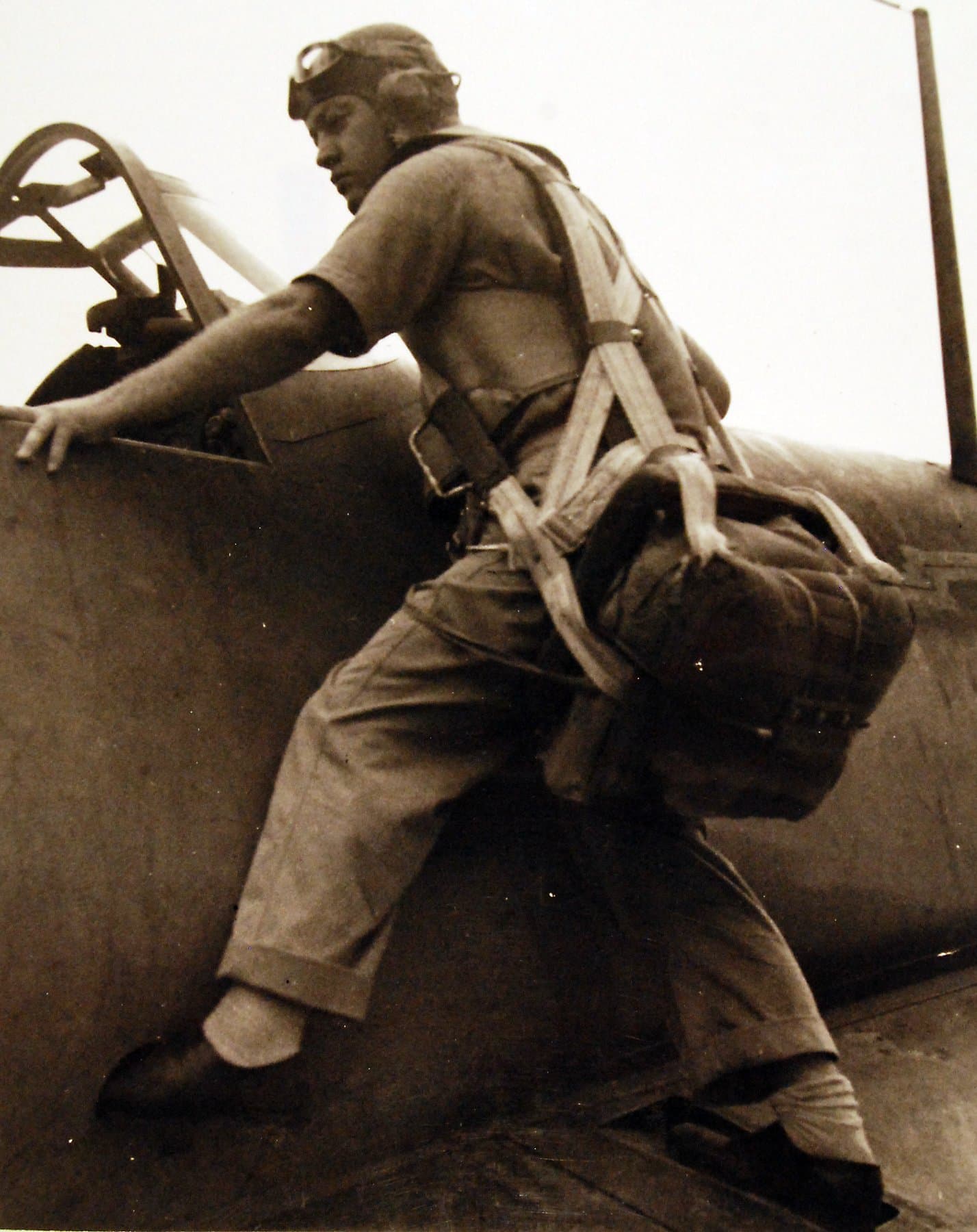
Lulubelle
The Corsair in Pappy Boyington's most famous photo carried a woman's name and twenty victory flags. The records say he never flew it in combat, and the name was not Lulubelle.
Read the story →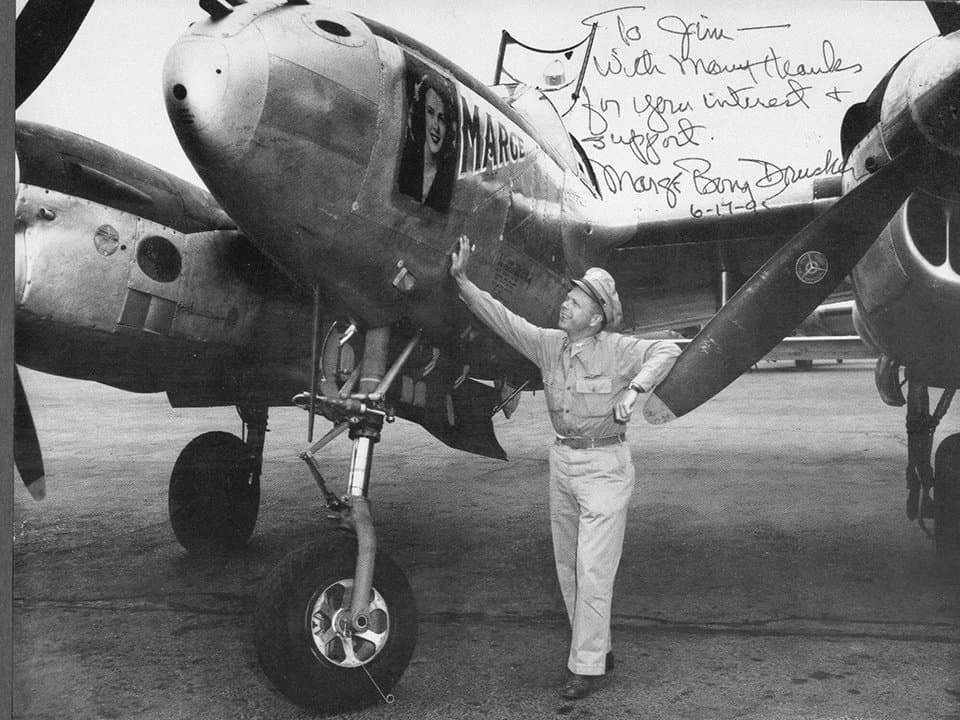
Marge
America's top ace flew with his girlfriend's portrait on the nose. He was killed the day of Hiroshima.
Read the story →